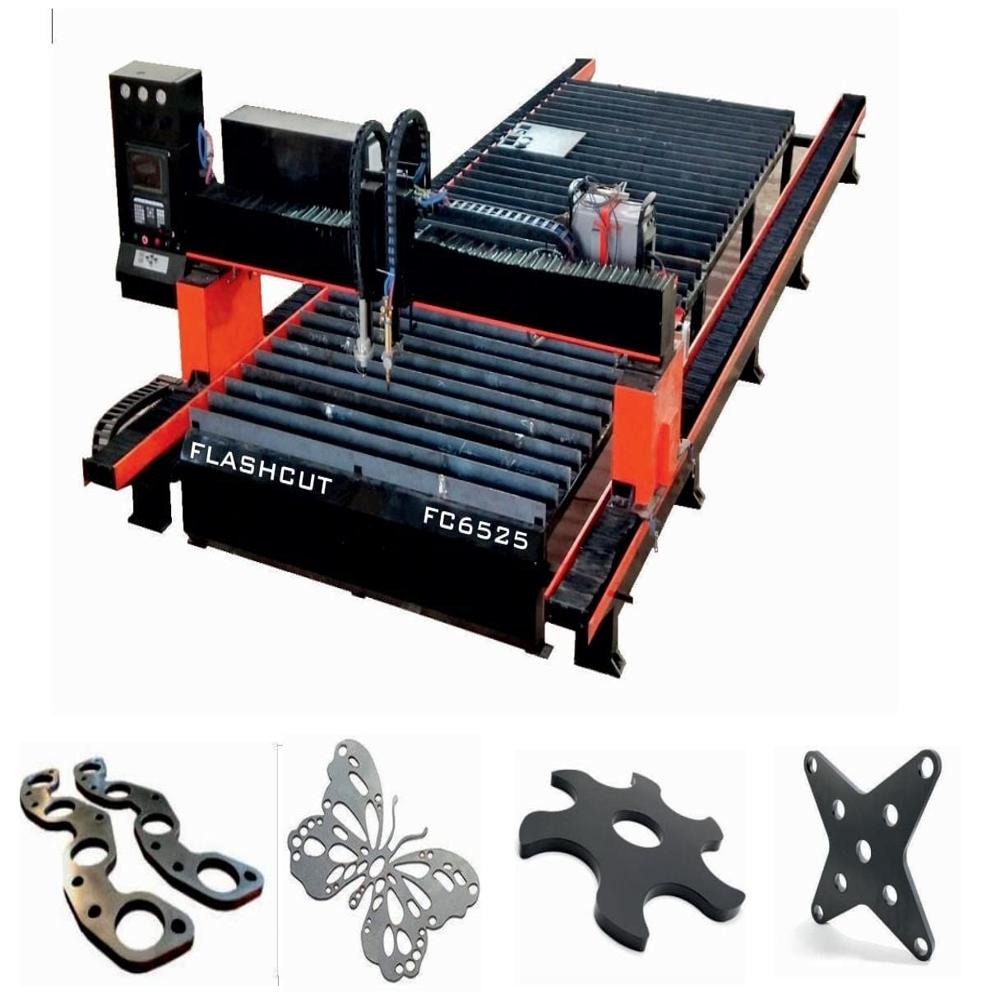
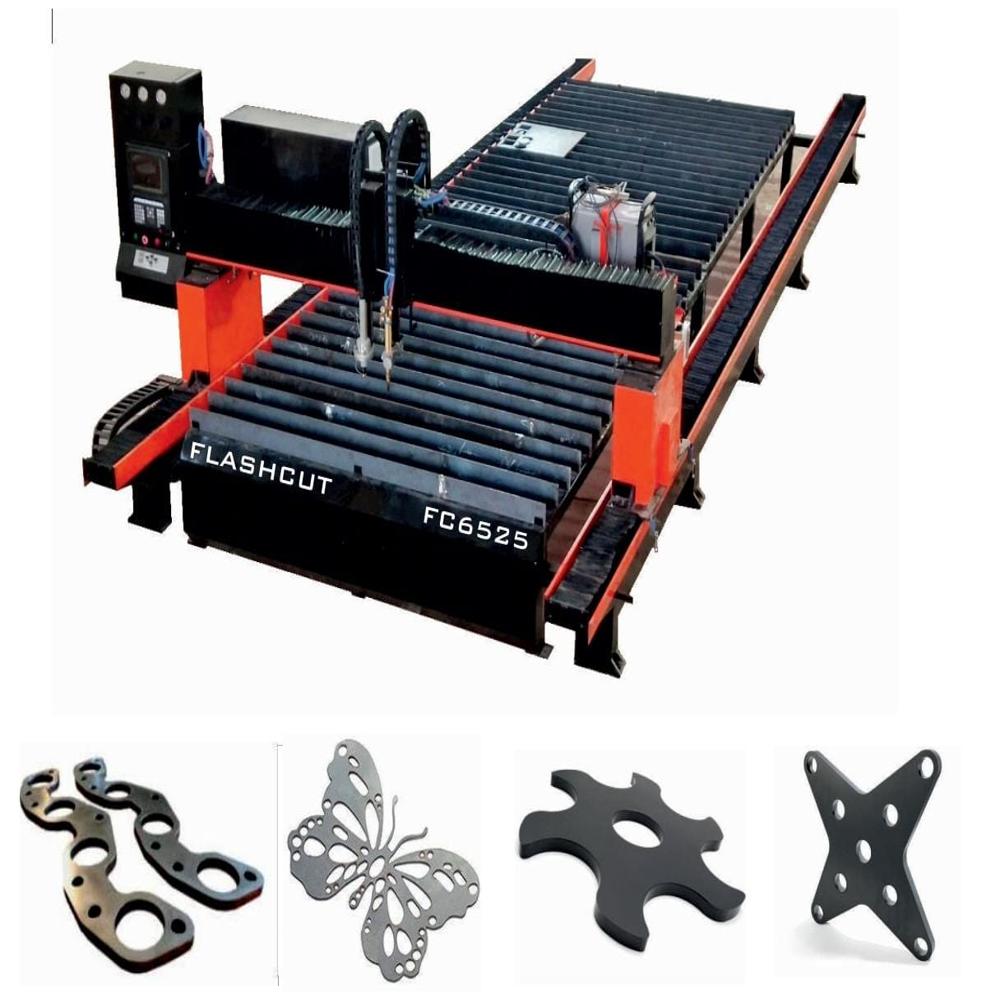
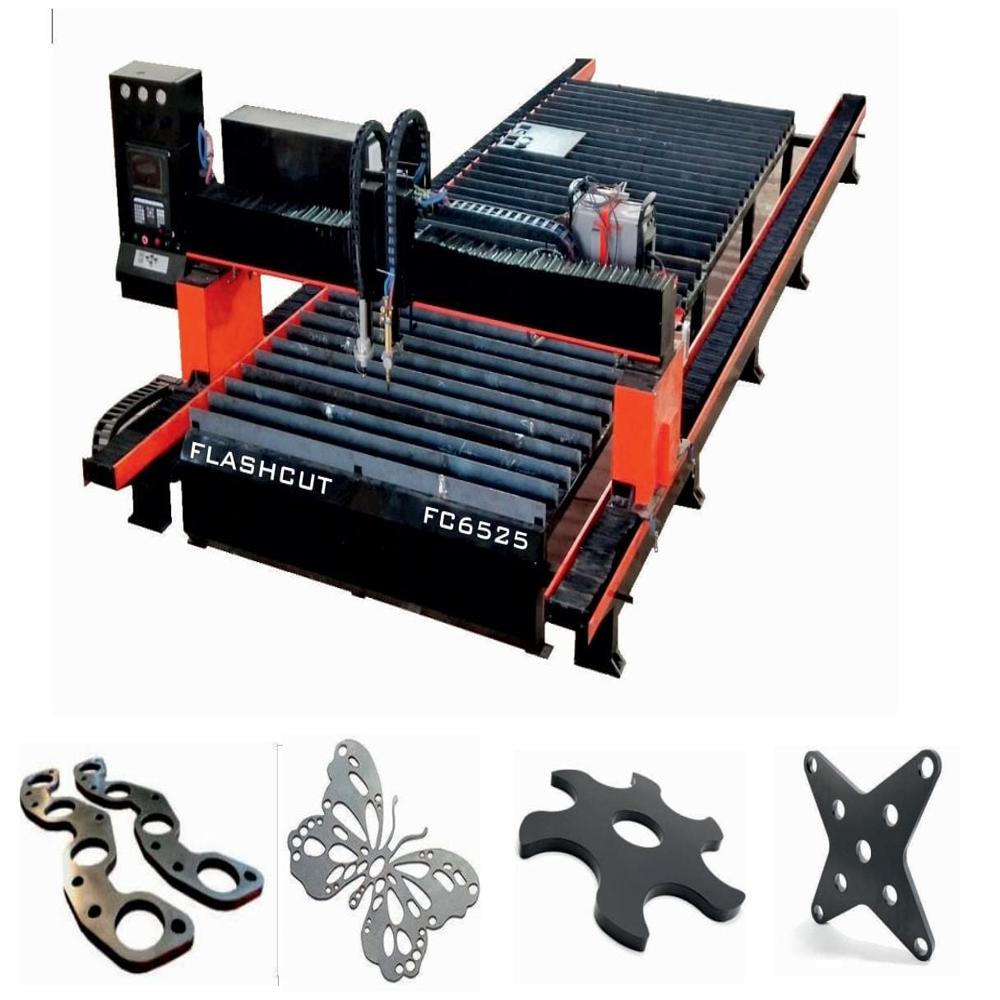
A CNC plasma cutting machine is an automated cutting system that uses a high-temperature plasma arc to cut electrically conductive metals such as mild steel, stainless steel, and aluminium. CNC means the cutting torch is controlled by a computer program to follow precise toolpaths.
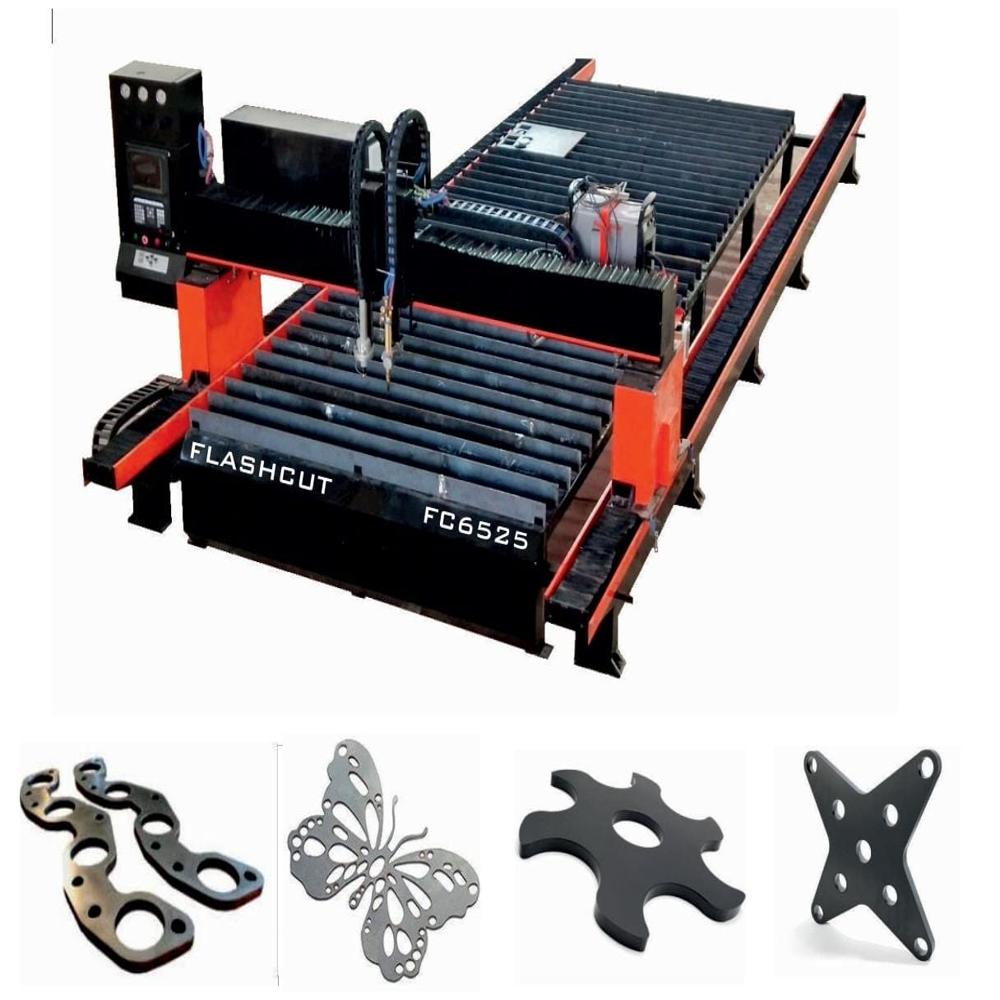
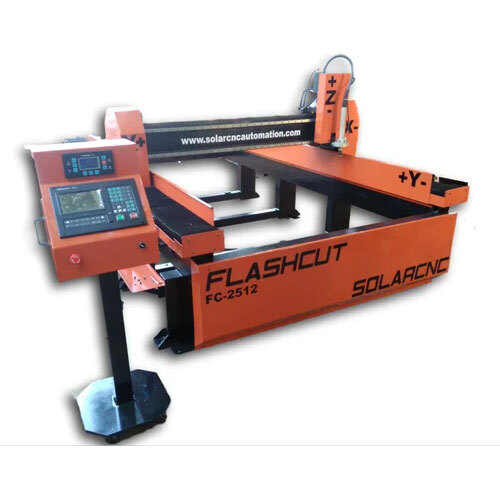
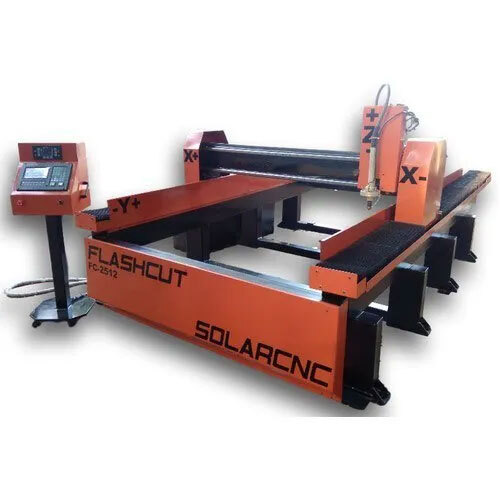
Main components / construction
| Component |
Function / typical details |
| CNC control system |
Reads CAD/CAM G-code and controls X, Y, Z movement and cutting parameters |
| Machine frame / bed |
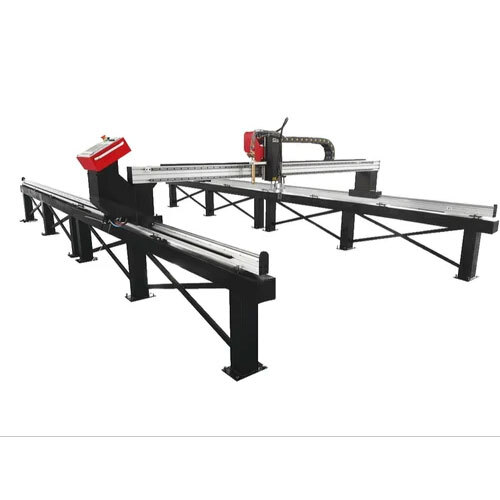
Heavy steel structure supporting the workpiece; usually a water table or slat bed |
| X-Y gantry system |
Moves the plasma torch accurately across the sheet |
| Z-axis / torch height control |
Maintains the correct torch-to-workpiece distance; often uses automatic torch height control |
| Plasma torch |
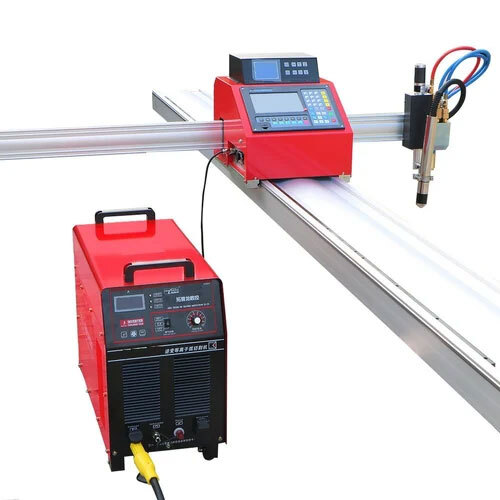
Generates the plasma arc and directs it onto the metal |
| Plasma power source |
Supplies high-frequency/high-current electrical power for arc generation |
| Air/gas supply |
Compressed air, oxygen, nitrogen, or other suitable plasma gas depending on material and process |
| Drive motors |
Servo or stepper motors move the gantry along the axes |
| Linear guides & racks |
Provide accurate and smooth mechanical movement |
| Electrical control panel |
Contains CNC controller, drives, relays, breakers, contactors and other electrical components |
| CAD/CAM software |
Converts drawings into cutting paths and G-code |
| Fume extraction / water table |
Reduces smoke, dust, heat and sparks produced during cutting |
Typical technical specifications
Specifications vary considerably by machine size and plasma power, but a typical industrial CNC plasma machine may have:
- Cutting area: 1500 3000 mm, 2000 4000 mm, 2500 6000 mm, etc.
- Plasma power: approximately 45200+ A, depending on application.
- Material: mild steel, stainless steel, aluminium and other electrically conductive metals.
- Typical cutting thickness: roughly 125/30 mm, depending heavily on the plasma source, material and required cut quality.
- Maximum piercing thickness: generally lower than the maximum edge-cut thickness.
- Positioning speed: commonly around 1020 m/min on many machines.
- Cutting speed: depends on material thickness and amperage; thin sheet can be cut much faster than thick plate.
- Drive system: stepper or servo motors.
- Torch height control: automatic THC is common.
- Input power: commonly 3-phase industrial power for larger systems; exact voltage/frequency depends on the plasma source and country.
- Cutting gas: compressed air, oxygen, nitrogen, or mixtures depending on the plasma system.
- Table: dry/slat table or water-cooled cutting table.
- Control: CNC controller with G-code/DXF/DWG workflow depending on the software.
How it works
- A drawing is created in CAD software.
- CAM software creates the cutting path and generates G-code.
- The CNC controller moves the torch along the programmed X-Y path.
- The plasma power supply creates an electrical arc.
- Gas passing through the torch becomes ionized and forms plasma, reaching extremely high temperatures.
- The plasma melts the metal, while the high-velocity gas jet blows the molten material away.
- The CNC system controls torch movement and, with THC, maintains the appropriate cutting height.
Important parameters when selecting a machine
The most important specifications are maximum plate thickness, desired cutting quality, cutting area, plasma power, cutting speed, positioning accuracy, torch-height control, power requirements, and available gas/air supply.
For example, if your main work is MS plates up to 20 mm, you would select the plasma power and torch based on the manufacturer's recommended piercing and production-cutting thickness, rather than selecting a machine solely from its advertised maximum cutting thickness.

 Send Email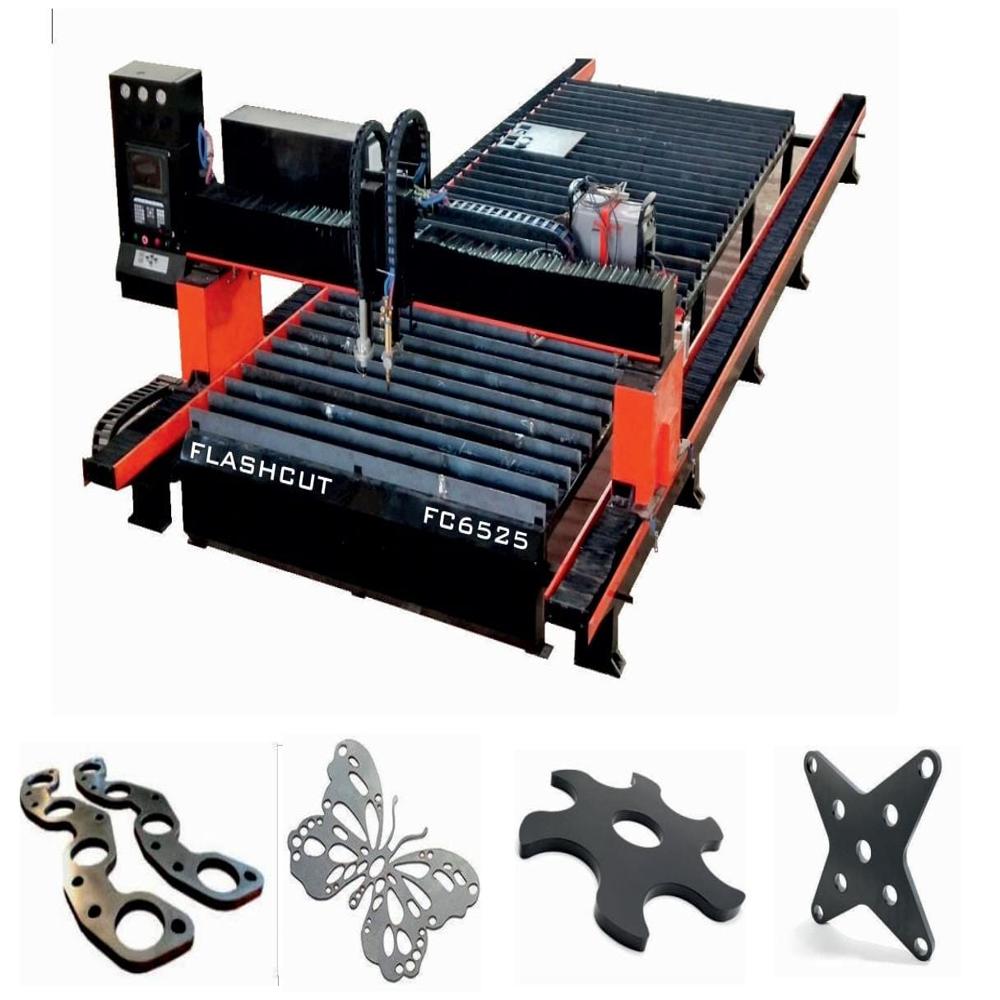

 Send Inquiry



 Send Inquiry
 Send Inquiry
 Send SMS
 Call Me Free

 English
 Spanish
 French
 German
 Italian
 Chinese (Simplified)
 Japanese
 Korean
 Arabic
 Portuguese